
What is a Cyber Threat Intelligence Program?
Starting a threat intelligence program is key to protecting your organization from cyber threats. But what makes a program robust and actionable?
In this post we’ll guide you through setting definitive goals, assembling a skilled team, and strategically shaping the scope of your program.
Key Takeaways
- For an effective threat intelligence program, you need clear goals, a skilled and diverse team, and a scope that matches your organization's specific risks and needs.
- The pillars of threat intelligence involve the collection of relevant data, analysis to identify patterns and trends for actionable intelligence, and effective dissemination of this intelligence across the organization to inform security policies and prevent breaches.
- Evaluating and adjusting security controls is crucial for identifying vulnerabilities and strengthening the defense strategy. This includes assessing the effectiveness of existing security mechanisms, adjusting configurations such as firewall rules and access controls, and mitigating potential cyber attacks.
- Integrating threat intelligence with your security tools, quickly responding to immediate threats, and planning for future risks are crucial for improving your ability to detect, analyze, and respond to cyber threats.
What Is a Cyber Threat Intelligence Program?
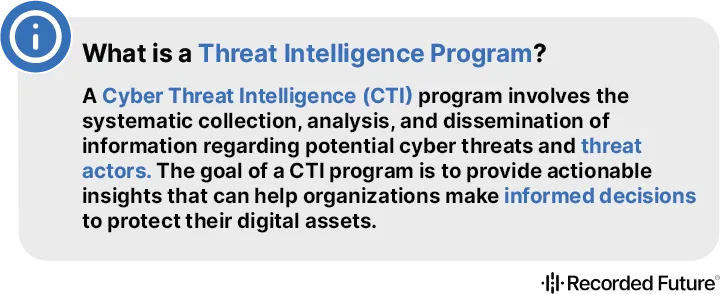
Un cibernético Threat Intelligence (CTI) implica la recopilación, análisis y difusión sistemáticos de información sobre posibles amenazas cibernéticas y actores de amenazas. El objetivo de un programa CTI es proporcionar información práctica que ayude a las organizaciones a tomar decisiones informadas para proteger sus activos digitales. Los programas CTI se centran en comprender las tácticas, técnicas y procedimientos (TTP) de los agentes de amenazas, lo que permite a las organizaciones anticipar y prevenir los ciberataques.
Operational intelligence leverages information from various sources to predict the timing and nature of future cyber attacks. This type of intelligence is utilized to adjust security controls, reduce response times, and provide insight into adversaries' plans, conducts, and sustained campaigns.
CTI programs gather data from various sources, including internal logs, external threat feeds, and social media platforms. This data is then analyzed to identify patterns and indicators of compromise (IOCs). The intelligence produced is used to enhance security measures, inform incident response plans, and support risk management decisions.
¿Por qué son importantes los programas de inteligencia de amenazas cibernéticas para las organizaciones?
Cyber threat intelligence programs transform raw data into actionable insights, allowing organizations to proactively defend against cyber threats. These programs shift the focus from a reactive to a proactive defense, enabling organizations to anticipate and mitigate attacks before they occur.
Recorded Future’s Levi Gundert, in his whitepaper, “Aim Small, Miss Small: Producing a World-Class Threat Intelligence Capability.” states:
Los programas de inteligencia de amenazas permiten a las organizaciones pasar de una postura de defensa reactiva a una proactiva. Al comprender las amenazas potenciales y sus metodologías, las organizaciones pueden anticipar y mitigar futuros atentados. La capacidad predictiva de la inteligencia de amenazas ayuda a identificar atacantes, zonas vulnerables y medidas específicas para la defensa frente a futuros ataques. Desde equipos de seguridad informática hasta la dirección ejecutiva, la inteligencia recopilada ayuda a tomar decisiones estratégicas sobre inversiones en inteligencia de amenazas y seguridad, estrategias de respuesta a incidentes y gestión general de riesgos.
Construyendo un programa eficaz de inteligencia de amenazas cibernéticas
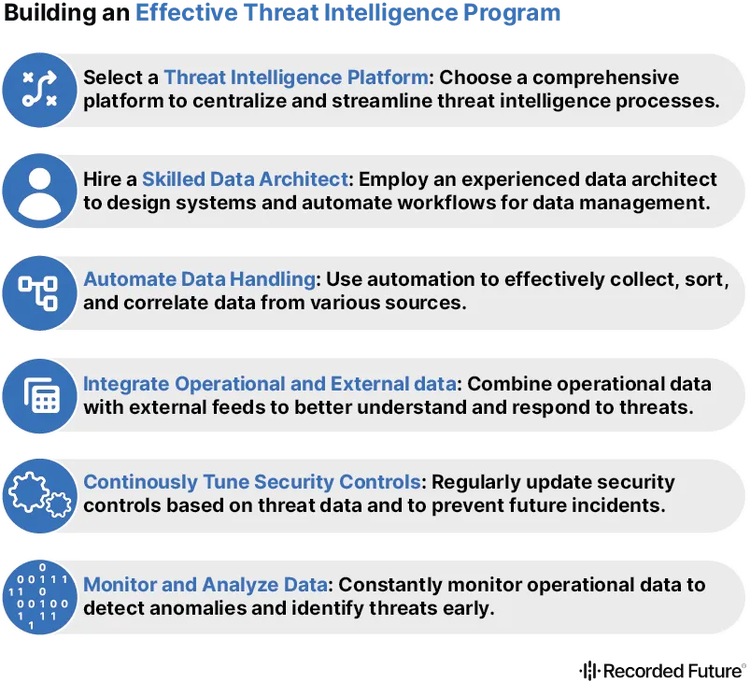
A mature threat intelligence program includes at least one full-time, talented, and experienced data architect, says Gundert. With the hunt for cyber intelligence threats in 2023 valued at 2.4 billion U.S. dollars, the growing demand for cyberthreat hunting shows the need for a good threat intelligence program. The security team plays a crucial role in processing threat data and mitigating attacks, ensuring the organization's security.
Para apoyar estos esfuerzos, es esencial seleccionar una plataforma robusta de inteligencia de amenazas que pueda centralizar y agilizar la recopilación, análisis y difusión de datos. Nuestra compañía, Recorded Future, ofrece soluciones integrales que mejoran la eficacia de los programas de inteligencia de amenazas mediante la integración de diversas fuentes de datos y la oferta de análisis avanzados.
The data architect designs systems and develops an automated workflow that allows him or her to quickly and easily store, process, and correlate internal and external data, which in turn allows for the identification of threats. This individual will also lead efforts to work with external vendors that supply threat data, and build internal tools that automate the extraction of operational data from various and varying data delivery methods.
Gundert illustrates:
Automating the collection, sorting, and correlation of operational data is just one aspect of a data architect’s threat intelligence responsibilities. Once the data has been processed, whether it’s from an external vendor or an internal system, the architect must then continuously tune the controls, based on the strategic analysis of the threat data (process known as threat intelligence analysis), which helps prevent future incidents.
Operational Data Is Essential For Cyber Threat Intelligence
Combining operational data with external threat intel helps organizations understand the threat landscape better and improves their ability to detect and respond to security incidents.
With threat intelligence, operational data serves as the foundation upon which proactive security measures are built. The integration of operational data into threat intelligence processes enables organizations to contextualize external threat intelligence feeds with internal telemetry, thereby enhancing their understanding of the threat landscape and improving their ability to detect and respond to security incidents.
One key aspect of operational data in threat intelligence is its role in facilitating the detection of anomalous or malicious activities within the organization's network environment. By constantly monitoring and analyzing operational data, security teams can establish normal behavior patterns and detect any unusual activity that might indicate security threats.
Without access to comprehensive and up-to-date information about the organization's IT environment, security teams may struggle to detect and respond to threats effectively. Operational data serves as the eyes and ears of the security infrastructure, enabling organizations to proactively identify potential security risks and take appropriate countermeasures before they escalate into full-blown incidents.
By aggregating and correlating data from various sources such as logs, network traffic, and endpoint telemetry, organizations can gain deeper insights into emerging threats and adversary behaviors. This data-driven approach empowers security analysts to identify patterns, discern correlations, and prioritize alerts based on their relevance and severity.
Midiendo el impacto de tu programa de inteligencia sobre amenazas cibernéticas
As with any investment, it’s essential to measure the impact and effectiveness of your threat intelligence program. This can be achieved by looking at its effects on reducing financial losses from incidents such as data breaches, improving risk management, and enhancing compliance with laws and industry regulations. But how do you measure these effects?
Two key components come into play: key performance indicators (KPIs) and continuous improvement.
Key Performance Indicators (KPIs)
Key performance indicators, or KPIs, are essential tools in measuring the business value of your threat intelligence program. By defining specific requirements and KPIs upfront, you can demonstrate the value of threat intelligence within your organization. These KPIs should consider how the program fits within the broader organizational context, including threat indicators, to ensure metrics encourage quality over mere volume.
Performance tracking can involve monitoring the number of incidents detected, the incident response time to these incidents, and the accuracy of threat predictions.
Continuous Improvement
Beyond tracking KPIs, continuous improvement is key to enhancing the effectiveness of your threat intelligence program. By incorporating feedback from stakeholders and conducting regular reviews, you can identify areas that require enhancements or adjustments. This allows you to continually improve your program, keeping it relevant and effective against emerging threats.
Benefits of Using Operational Data In Threat Intelligence Programs
The integration of operational data serves as a real-time sentinel, providing continuous insights into the network environment's activities. With logs, network traffic, and system configurations, security teams can swiftly detect anomalies, unauthorized accesses, or suspicious behaviors indicative of potential threats.
Leveraging operational data also enhances incident response capabilities by furnishing vital context during security incidents. And operational data offers invaluable intelligence for threat assessment and trend analysis, enabling organizations to anticipate and prepare for evolving cyber threats proactively.
Through the strategic use of operational data, threat intelligence programs can fortify cybersecurity postures and proactively safeguard against an increasingly sophisticated threat landscape.
Superando los desafíos comunes de la inteligencia de amenazas cibernéticas
Threat intelligence, also known as cyber threat intelligence, is a powerful tool in cybersecurity, but implementing it effectively can come with its own set of challenges. These may include budget constraints, skill shortages, and a lack of clarity on stakeholder roles and objectives. To overcome these challenges, organizations must develop their threat intelligence capabilities and establish a threat intelligence strategy to ensure a robust cybersecurity posture.
Let’s explore how you can navigate these challenges and ensure your threat intelligence program is as effective as possible.
Data Overload and Prioritization
One of the common challenges faced by cybersecurity teams is data overload. With the sheer volume of alerts and issues arising from subscribing to intel feeds, it can be challenging to maintain strategic analysis and avoid false positives. Prioritizing alerts and focusing on high-fidelity threats can help manage this data overload.
By leveraging threat intelligence, you can filter security data to prioritize the most critical alerts and remove non-relevant information or ‘white noise’, thereby mitigating the issue of alert fatigue.
Ensuring Timely and Relevant Intelligence
Another challenge is ensuring that the intelligence provided is both timely and relevant. To overcome this, adjusting the format and content of threat intelligence reports to meet stakeholder needs is critical. By delivering intelligence that is tailored to the expertise and time constraints of your stakeholders, you ensure that the information is both useful and actionable.
Collaborative sharing of threat intelligence also equips organizations with real-time updates, enabling prompt actions against threats.
Balancing Resources and Capabilities
Finally, balancing resources and capabilities is a common challenge. Ensuring adequate resource allocation is critical to maintaining a sustained capability in a threat intelligence program. Given resource constraints, it’s often necessary to focus on:
- talent with multi-disciplinary skills
- leveraging existing tools and technologies
- prioritizing high-value targets
- collaborating with external partners
Investing in automation and machine learning can help organizations overcome manpower limitations by efficiently analyzing large datasets, while focusing on high-fidelity alerts and high-impact threats can help a threat intelligence team operate effectively within resource limits.
Mejores prácticas para programas efectivos de inteligencia de amenazas cibernéticas
As we’ve navigated the world of threat intelligence, we’ve touched on various components and techniques that contribute to a robust program. To wrap up, let’s review some key strategies and considerations that can help you build and maintain a successful threat intelligence program.
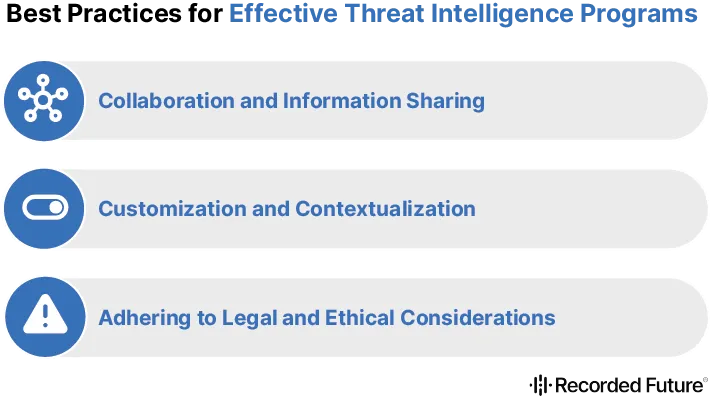
These best practices include collaboration and information sharing, customization and contextualization of threat intelligence, and adhering to legal and ethical considerations.
Collaboration and Information Sharing
In the world of cybersecurity, collaboration is key. Sharing threat intelligence with trusted partners can offer broader perspectives on emerging threats and diverse expertise, leading to a richer understanding of the threat landscape. By fostering mutual support and trust among partners, you create a united front against cyber threats, highlighting the significant role of shared intelligence in cybersecurity defense.
Moreover, staying informed about trends and best practices can help you manage resources more efficiently and ensure your intelligence program remains relevant.
Customization and Contextualization
Customization and contextualization of threat intelligence can enhance its effectiveness by addressing the challenge of translating generic insights into targeted intelligence. By tailoring your threat intelligence to your stakeholders’ needs, you can deliver intelligence that is both useful and actionable. This can result in improved business KPIs such as reducing downtime and enhancing employee productivity.
Moreover, operationalizing customization and contextualization through structured frameworks and analytical models can help realize these benefits.
Legal and Ethical Considerations
Last but certainly not least, it’s crucial to consider legal and ethical considerations when operating a threat intelligence program. Cybersecurity professionals are ethically bound to protect sensitive data. They must balance security with societal values and adhere to a strong ethical compass. This involves:
- Identifying harmful online conducts
- Considering considerations such as confidentiality
- Balancing threats with risks
- Aligning security with business interests
- Ensuring user privacy
Professionals are also expected to report unethical or illegal activities, facing ethical dilemmas related to privacy and data access.
Mejora tu programa de inteligencia de amenazas cibernéticas con futuros grabados
Managing operational threat data requires skill, patience, and continuous refinement. A well-defined role for the data architect within your threat intelligence capability is crucial for success. At Recorded Future, we understand these challenges and provide solutions to streamline these processes.
Book a demo with us today and we’ll show you how our threat intelligence can improve your data collection, sorting, correlation, and contextualization so that you can focus on finding emerging indicators of compromise to your business.
FAQs
What are the key components of a threat intelligence program?
A comprehensive threat intelligence program includes several key components: collection, analysis, and dissemination of security data. The program should integrate tactical threat intelligence, operational threat intelligence, and strategic intelligence to cover various aspects of cybersecurity. This approach helps security professionals in identifying critical threats and developing actionable threat intelligence to enhance the overall security posture.
How can threat intelligence programs help in vulnerability management?
Cyber threat intelligence programs play a vital role in vulnerability management by providing accurate intelligence on the latest threats and identified vulnerabilities. By analyzing data from various sources, including external threat intel and internal telemetry, organizations can prioritize remediation efforts and adjust their security controls to mitigate risks. This proactive approach helps in preempting future attacks and reducing the attack surface.
What challenges do security operations face in implementing threat intelligence programs?
Las operaciones de seguridad a menudo se enfrentan a desafíos como la sobrecarga de datos, el análisis oportuno de amenazas y la integración con las herramientas de seguridad existentes. El uso eficaz de la inteligencia sobre amenazas cibernéticas implica procesar grandes cantidades de datos de diferentes fuentes, incluida la dark sitio web, para proporcionar información accionable. Superar estos desafíos requiere colaboración entre equipos de inteligencia, un ajuste continuo de los procesos del ciclo de vida de la inteligencia de amenazas y el aprovechamiento de la inteligencia técnica sobre amenazas para apoyar la respuesta rápida a incidentes de seguridad.
How does threat intelligence support strategic decision-making for cybersecurity?
Cyber threat intelligence supports strategic decision-making by providing insights into the cyber threat landscape and the tactics, techniques, and procedures (TTPs) of cyber adversaries. Intelligence reports and threat hunting techniques help organizations understand threats relevant to their business objectives. By incorporating threat intel into security operations center activities, organizations can enhance their defenses against attack vectors and improve their overall security posture.
This article was originally published November 23, 2015, and last updated on Jun 3, 2024.