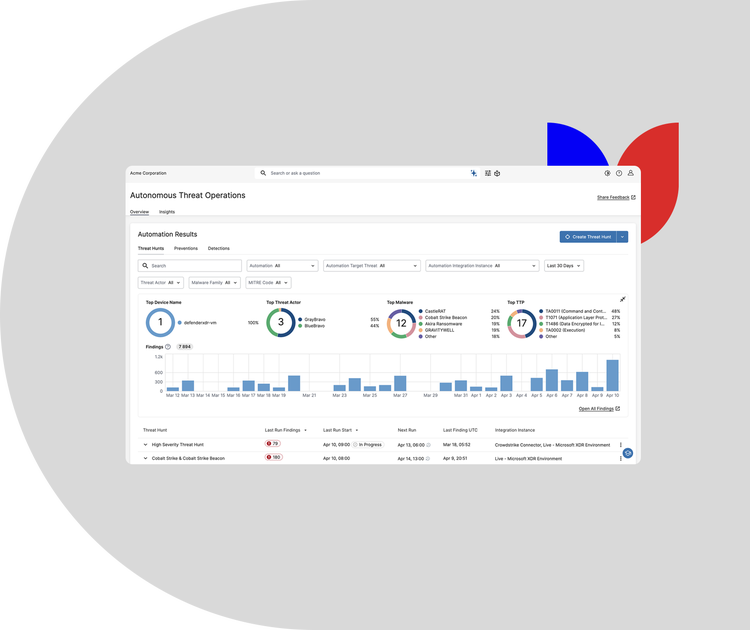
Autonomous
Threat Operations
is here.
Replace manual hunting cycles and limited visibility with 24/7 AI-powered detection, automated multi-source correlation, and a clear picture of organizational risk.
Enable continuous operations at machine speed.
Security teams remain trapped in reactive cycles—manually hunting threats, correlating disparate feeds, and struggling to operationalize intelligence. Autonomous Threat Operations breaks this cycle so you can proactively and autonomously hunt, detect, and prevent threats.
Drive impact across your security organization.
Reduce manual bottlenecks.
Reduce manual bottlenecks.
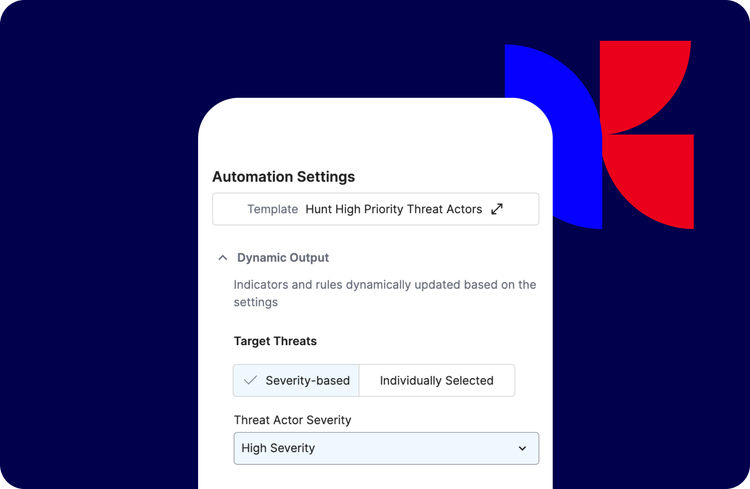
Your analysts didn't train for years to copy-paste IOCs. Autonomous operations run 24/7, handling the repetitive work so your team can focus on what humans do best: strategic thinking, problem-solving, and outsmarting adversaries.
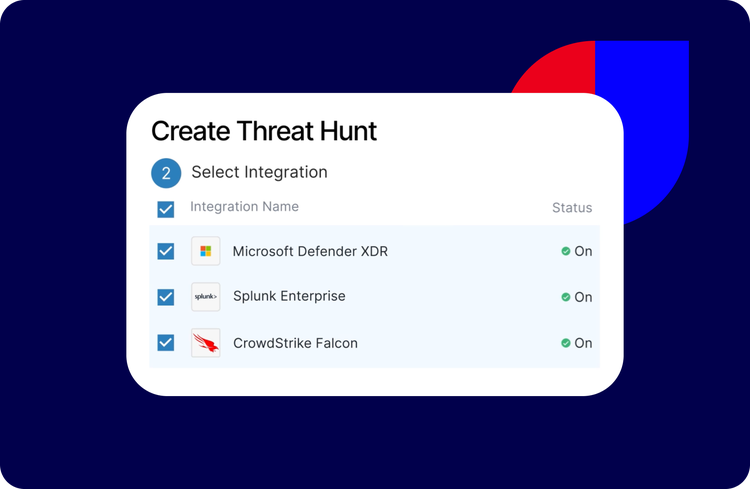
Make your current tools actually work together.
Make your current tools actually work together.
Autonomous Threat Operations doesn’t require rip-and-replace. Your current tools can become more effective when they work together autonomously.
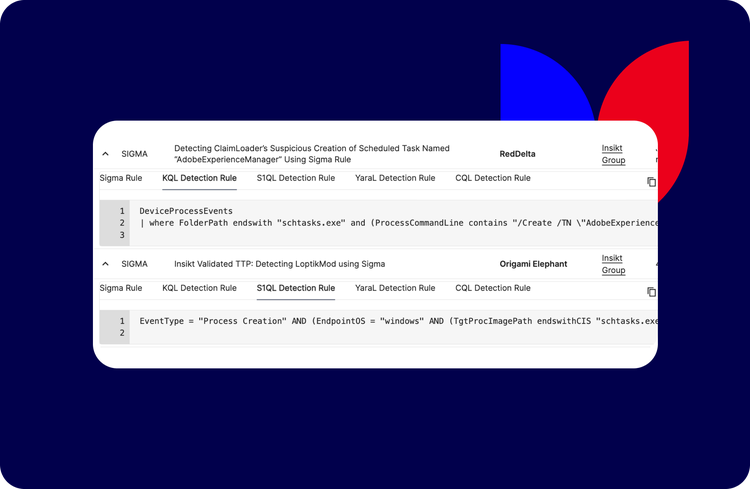
Prove what you’ve been preventing.
Prove what you’ve been preventing.
Track each prevented attack, blocked threat, and avoided incident. Show your leadership the exact threats you’ve stopped and the damages you’ve avoided.
Hit the ground running.
Hit the ground running.
Expert services come standard. We'll help you configure integrations, deploy your first autonomous threat hunt, and build executive reporting, so you see results even faster.
Top Autonomous Threat Operations capabilities.
Included with Professional and Elite packages.
Available as an add-on for the Core package.
Autonomous Threat Operations delivers more

What is Autonomous Threat Operations?
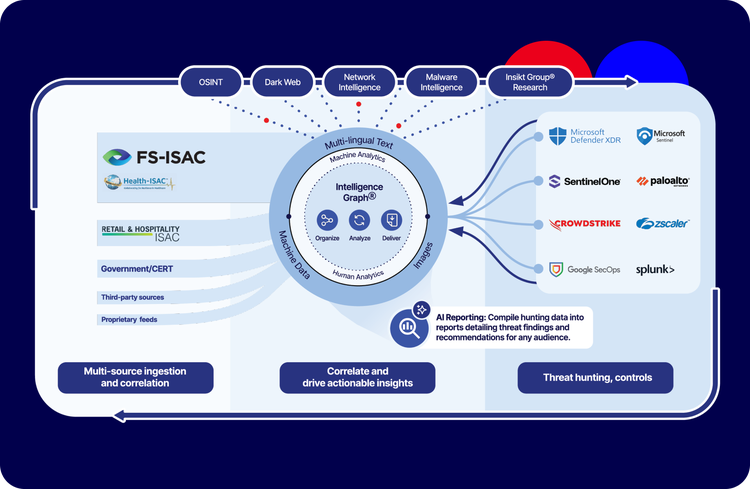
Autonomous Threat Operations is a new capability focused on reducing manual cyber operations through AI-powered continuous hunting and multi-source correlation in the Intelligence Graph®. Autonomous Threat Operations offers the following key features:
- Autonomous Threat Hunting to track IoCs, malware, and threat actors across your technology stack
- Unified threat protection across all controls to block, detect, and prevent threats across all your tools
- Multi-source ingestion and correlation with the Intelligence Graph®, which means you can ingest custom sources and the data will be enriched and prioritized based on Recorded Future Risk Scores and associated threats
- AI Reporting, which quickly provides clear, actionable insights into threat hunting, prevention, and detection findings that are specific to your organization
What problem does Autonomous Threat Operations solve?
Organizations are finding it difficult to operationalize threat intelligence across the business. They’re spending too much time and tying up resources on manual cyber operations, and that limits the effectiveness and value of their threat intelligence.
What’s the difference between "autonomous" and "automated"?
- Automated systems follow pre-programmed rules and workflows.
- Autonomous solutions work independently using AI. They can adapt, learn from new intelligence, and make decisions with minimal human intervention—all while providing guardrails that give you full control over the way you operationalize intelligence.
Can Autonomous Threat Operations integrate with our existing security tools?
Yes, it’s designed to seamlessly integrate with your existing security ecosystem, including SIEMs, SOARs, firewalls, and endpoint protection solutions. This ensures that the threat intelligence you receive is actionable and can be used to strengthen your overall security posture.
Integrations supported by Autonomous Threat Operations include:
- Microsoft Defender XDR
- Microsoft Sentinel
- Splunk
- Crowdstrike XDR & NGSIEM
- Google SecOps
- Sentinel One
- Zscaler
- Palo Alto NGFW
We’ll continue adding integrations over time to enable connectivity with other tools.
See the latest supported integrations and sources for Autonomous Threat Operations
How does Autonomous Threat Operations enhance Recorded Future’s existing integrations?
The purpose of our integrations into SIEM, SOAR, and other platforms is to prioritize alerts and entities within those platforms. With Autonomous Threat Operations, you can now initiate a threat hunt directly within Recorded Future and view those results across multiple connected tools, from SIEMs to EDRs.
Other enhanced capabilities allow you to:
- Enable custom sourcing, such as ISAC sources, outside threat intelligence, or customer sources.
- Bring together external intelligence, beyond just Recorded Future’s.
- Manage those indicators.
- Better connect data from different sources through Recorded Future and into other security platforms.
How is Autonomous Threat Operations threat hunting different from the pre-built threat hunting capability available within Recorded Future’s Splunk integration?
Recorded Future’s Splunk integration is one of the few where customers can launch a threat hunt using Recorded Future data within Splunk. However, the Autonomous Threat Operations capabilities allow for the following:
- Dynamic threat hunts—When a threat actor is added to or removed from the Threat Map, Autonomous Threat Operations automatically updates the hunts to reflect the change.
- External intelligence enrichment—Autonomous Threat Operations merges external threat feeds, including Recorded Future’s, into threat hunts, adding insights that may not be available in Splunk.