ニューロテクノロジーに対する新たな脅威
概要
Neurotechnology is rapidly moving beyond clinical use cases, expanding the attack surface for sensitive neurological and biometric data: As adoption grows, larger volumes of brain activity, biometric, and behavioral data will be collected by commercial platforms, creating new opportunities for data theft, misuse, and exploitation.
China and the United States (US) are engaged in strategic competition in neurotechnology development: The US leads in the number of neurotechnology firms, and brain-computer interface (BCI) research has been a long-term research priority for the US military. At the same time, China’s five-year guidance for BCI development, subsidies for major wearable technology firms, and military research into human-machine integration suggest that neurotechnology is a strategic priority.
大手ニューロテクノロジー企業は知的財産(IP)窃取を目的とした標的となるリスクが高まっています。ニューロテクノロジーは開発コストが高く、戦略的価値も高いため、このセクターの企業は国家支援型スパイ活動、インサイダー脅威、およびサイバーを利用した窃取の魅力的な標的となる可能性が高いでしょう。IPの窃取が成功した場合、研究開発(R&D)に多額の投資を行っている企業の競争上の優位性を損なう可能性があります。軍事および高等教育の研究機関もまた、R&Dおよび関連データへのアクセスを目的とした攻撃の標的にされる可能性があります。
Neurological and biometric data will become an increasingly valuable target for cybercriminals and state-linked actors: Attackers may seek to exfiltrate these datasets for extortion, surveillance, strategic intelligence, or model development. The sensitivity of this data could make breaches particularly damaging for affected individuals and companies, making it an attractive target for extortion-focused cybercriminals.
Regulatory and national security scrutiny of neurological data will likely intensify: Existing privacy frameworks in the European Union (EU) and several US states already provide heightened protections for neurological or biometric data, but rapid advances in neurotechnology may outpace consumer protection laws.
解析
What is neurotechnology?
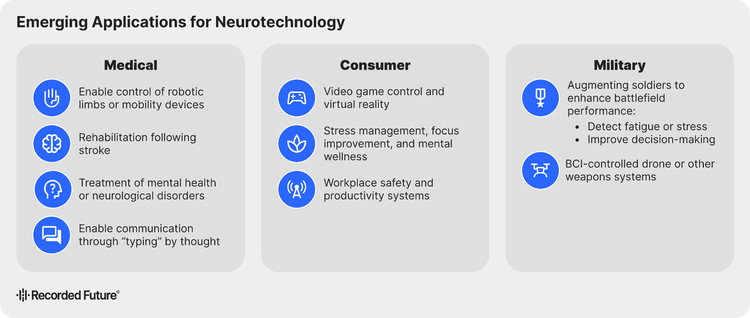
Neurotechnology is the field focused on understanding and interacting with the brain through technology. Much of the progress so far has been in medicine, where scientists seek to use the technology to treat neurological disorders such as Parkinson’s disease or paralysis. Implantable BCIs have demonstrated the ability to translate brain activity into words, enabling individuals with neurological injuries to speak again. In June 2026, China approved the world’s first commercial brain implant, which allows individuals with spinal cord injuries to regain motor control of their hands via a robotic glove. Other BCI technologies remain in clinical trials. Less invasive examples of the technology include medical electroencephalography (EEG) equipment that externally measures brain activity to diagnose and monitor conditions such as epilepsy, sleep disorders, and ADHD. The global neurotechnology market is projected to reach $53 billion by 2034, driven by the rising prevalence of neurological disorders and the rapid evolution of artificial intelligence (AI) and machine learning that enable the interpretation of neurological data.
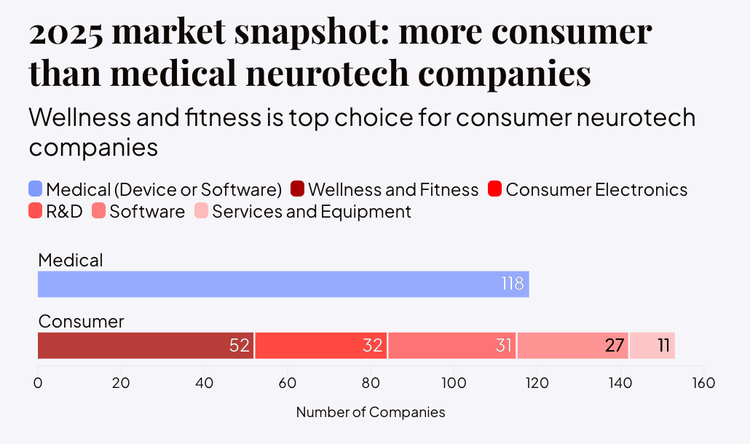
Outside of medical use cases, the consumer neurotechnology market is rapidly expanding. According to a market study published by the Centre for Future Generations in mid-2025, 45 consumer neurotechnology brands focused on wellness and fitness emerged over the last decade, making it the largest consumer sector in neurotechnology devices. These include products that monitor brain activity to improve focus, such as glasses that use neurofeedback to darken when the user is distracted and lighten when they are focused, as well as products that use brain data for “brain training” exercises to improve calmness and focus. Other consumer use cases include devices for hands-free gaming and entertainment. In 2025, the consumer market outpaced the medical market in terms of the number of new companies.
Established technology companies such as Meta and Google are also investing in neurological and neurotechnology research. Meta has announced progress in using an AI model to interpret magnetic scans of brain activity to predict what participants were typing. While Meta has highlighted the therapeutic uses of this technology, it has also suggested incorporating it into consumer wearables that would allow users to type or play video games with their minds.
消費者向けおよび医療用のニューロテクノロジーデバイスは、いずれも動作と改善のために、ユーザーに関する生体測定(バイオメトリクス)データと神経学的データに依存しています。これには、脳のどの領域がいつ活動しているかを示す指標として、血流、電気活動または磁気活動を使用する脳活動の測定が含まれます。心拍数や皮膚電気活動などのその他のバイオメトリクス指標も、認知や感情を理解する上で役立ちます。これらの測定値は、OuraリングやGarminウォッチ、Google Fitbitなど、さまざまな消費者向けウェアラブルデバイスにおいて、ストレスレベルのプロキシとして使用されています。これらのデバイスは人気が高まっており、ウェアラブル製品の出荷量は2025年に前年比9.1%増加しています。AIおよび機械学習アルゴリズムは、患者向けおよび消費者向けデバイスのために、大量の脳やその他のバイオメトリクスデータを有意の結果として解釈するうえで不可欠です。
In addition to commercial and medical uses, neurotechnology and BCI have potentially transformative military applications. Military researchers in multiple countries are exploring BCI to support more effective knowledge transmission, improve decision-making, mitigate the cognitive impacts of stress or fatigue, and enable control over drones or other military platforms through thought. In particular, both the US and China have invested significantly in research in human-machine augmentation for warfighting. The dual-use nature of the technology increases the risk of exploitation, cyber theft, and regulatory exposure (such as export controls), as discussed in more detail below.
ニューロテクノロジーと生体認証データへの新たな脅威
State-Sponsored Espionage and IP Theft
Much like AI, neurotechnology is a focal point of strategic competition between the US and China. This puts neurotechnology IP and neurological data at greater risk for economic espionage and cyber theft. While the US and Europe lead in the number of neurotech firms, the Chinese company Neuracle has produced the first BCI approved for commercial use. Multiple other Chinese companies are moving toward clinical trials in both invasive and non-invasive BCI. Chinese researchers are second only to the US in neurosciences research output, while leading Chinese labs have pushed for hiring BCI research talent. This is likely the result of national and regional prioritization of neurotechnology and BCI in China. Since at least late 2024, multiple provinces have issued dedicated action plans to spur BCI development, and in July 2025, China’s central government issued a guiding document for developing BCI technology through 2030, demonstrating continuing intentions to invest significant resources in advancing neurotechnology.
より広い視点で見ると、生体情報を収集・使用する消費者向けウェアラブルテクノロジーの中国市場は急速に拡大しています。中国政府はウェアラブルテクノロジーの大手XiaomiとHuaweiに補助金を提供し、スマートウォッチとスマートグラスの分野で世界トップのベンダーになるのを支援してきました。中国製のウェアラブルは、ハンズフリー通話、音楽ストリーミング、リアルタイム言語翻訳、eコマース、ナビゲーション、決済をサポートするアリババのスマートグラスをはじめ、より広範なAI対応ソフトウェアエコシステムに統合されています。このウェアラブルデバイス市場の拡大は、商用AIモデルをさらに強化するために活用できる生体データの潜在的に膨大な情報源を提供し、それによってウェアラブルへの生体データのより正確な統合を可能にします。
Technologies prioritized for military or economic advancement in China are often targets of economic espionage and IP theft. Tactics include using malicious insiders to smuggle out sensitive technology, as allegedly occurred at General Electric and Google. Widespread cyber campaigns have also led to IP theft at companies in strategically important industries such as manufacturing, energy, and pharmaceuticals. Neurotechnology companies targeted for IP theft risk a significant competitive disadvantage, as the returns on costly research and development investments may be reduced, including through increased market competition by beneficiaries of stolen IP.
The neurological and biometric data collected by these devices may also be targeted for theft. Threat actors linked to the Chinese government have a long history of targeting personally identifiable information (PII) for mass exfiltration, though in the last several years, espionage has become increasingly targeted toward specific intelligence priorities. Examples of mass data exfiltration incidents include the 2015 Anthem hack (affecting nearly 80 million customers), the 2017 Equifax breach, and the 2018 breach of Singapore’s largest healthcare provider (affecting 1.5 million patients). More recently, the Salt Typhoon campaign breached dozens of US telecommunications companies, though these attacks may have targeted specific individuals or critical national security systems. As the ability to analyze and use biometric and neurological data advances, this data has the potential to become a strategic asset for the Chinese military and may become increasingly valuable as a target for data exfiltration.
Cyber Exploitation and Disruption
Neurotechnology devices may also be targets for cyber threat actors seeking to disrupt functioning and thereby cause harm to patients. Previous vulnerabilities found in medical devices have led to safety recalls due to the risk that an exploitation of the vulnerability could prevent the device from functioning. Currently, at least one vulnerability has been discovered in a consumer brain-wave monitoring device that would allow attackers to remotely disrupt its output, leading to incorrect data about brain activity. As more medical and consumer neurological devices reach the market, more vulnerabilities are likely to be discovered.
In addition to vulnerabilities in the device itself, threat actors can target vulnerabilities in remote monitoring systems, including mobile applications and cloud-based software that collect and interpret neurological data from the device. This data could be tampered with to give inaccurate readings, obscuring potential health problems or causing false alarms. Finally, attacks on information technology systems at neurotechnology companies can lead to downstream operational disruptions for device users. The recent cyberattack against Stryker delayed some surgical procedures because the company was unable to deliver patient-specific products.
Vulnerabilities in biometric trackers are more prevalent, as these devices are more widely available. As of June 2026, 31 vulnerabilities were recorded for biometric trackers, primarily smartwatches, of which seven have a severity rating of “critical,” requiring immediate remediation. Exploiting these vulnerabilities could give attackers access to sensitive data or disrupt medical or wellness functionality.
Data Theft and Extortion
Criminal theft of brain or other biometric data could pose a significant extortion risk due to the data's sensitivity. In June 2026, neuroscience company Glucobit reported a data breach of its Reframe app, a digital resource that purports to apply research on how the brain responds to alcohol to help manage alcohol use. The app collects data on users’ daily habits, alcohol consumption, and emotional well-being. While it is not yet clear which system was affected, the company’s data breach notification letter warns about unsolicited communications referencing users’ “health, wellness, or personal habits,” suggesting that sensitive personal data may have been exposed in the breach. Criminals could weaponize this data in highly targeted scams, such as using the information to build trust in romance scams or to advertise fraudulent treatment programs. Data on alcohol use and brain activity, or connections between the two that may be generated by analytics in the app, may also be used in extortion schemes, with perpetrators threatening to expose the information to a victim’s friends, family, or coworkers.
As consumer and medical neurological or neuroscience products become more widely adopted and as data from those devices becomes increasingly interpretable into thoughts, emotions, or health conditions, this data will likely become more available to cybercriminals.
Legal and Privacy Risks
Due to its sensitivity, neurological data has received additional scrutiny under regulatory regimes. The EU extends a special category of protection for brain data under the General Data Protection Regulation (GDPR), while multiple US states have added additional protections for neurological data under their privacy regulations. This means that exposure of this data can result in increased penalties if companies fail to implement sufficient data protection measures. However, rapid advances in neurotechnology may create gaps in consumer protection and raise new legal questions, such as whether employers have the right to collect employees' brain data. An emerging protection gap concerns consumer wellness products that collect brain data or other biometrics to help improve focus, reduce stress, or manage habits. Because many of these products are not offered by HIPAA-covered entities, HIPAA may not apply, leaving sensitive health-adjacent data governed mainly by consumer privacy, FTC, or state-law protections.
さらに、ニューロテクノロジーデバイスのデュアルユース(軍民両用)という性質は、輸出規制およびその他の国家安全保障規制に関連するリスクをもたらします。2023年、ハーバード大学の科学者が、中国の人材採用プログラム「千人計画」により受け取った報酬について米国当局者に虚偽の申告をした罪で有罪判決を受けました。彼が調査対象となったのは、彼の研究が米国政府機関から資金提供を受けていたためです。その提供資金には、国防総省からのものも一部含まれていました。この防諜調査は米国と中国の双方にとって、当該研究が国家安全保障上、重要だったことを示しています。米国のニューロテクノロジー研究またはその応用における今後の進歩は、輸出規制の対象となる可能性があり、消費者への提供を制限する可能性さえあります。
今後の展望
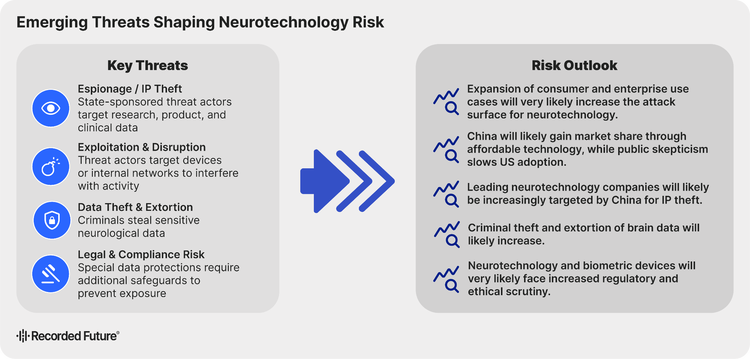
- Expansion of consumer and enterprise use cases will very likely increase the attack surface for neurotechnology: As neurotechnology becomes cheaper and easier to use, consumer and enterprise use cases for neurotech products will increase. This will entail increasing numbers of people using neurodata for non-medical use cases, including hands-free gaming and stress reduction. On the enterprise side, this may include professional development tools, such as focus-improvement tools, as well as safety monitors for jobs that require sustained attention, such as pilots or heavy-machinery operators. Increasing use cases will significantly expand the attack surface for exploiting neurotechnology operations or data.
- China will likely gain market share through affordable technology, while public skepticism slows US adoption: While the US is likely to continue to support the largest market for neurotechnology, Chinese companies will excel in expanding affordable products, as they have in other emerging technologies. This will likely result in a greater global user base for Chinese neurotechnology products. A larger customer base may give these companies a competitive edge as more data will be valuable for improving the accuracy and utility of algorithms. At the same time, US consumer adoption may be slowed by negative public perceptions of big technology companies and AI, similar to the lower adoption of AI in the US compared to other advanced economies.
- Leading neurotechnology companies will likely be increasingly targeted for IP theft by China: Both medical and consumer companies will be increasingly targeted by industrial espionage campaigns as China continues to pursue neurotechnology as a strategic technology. This will likely include cybertheft carried out by state-sponsored threat groups, as well as the compromise of current employees or the embedding of insider threats at leading US-based neurotechnology companies.
- Criminal theft and extortion of brain data will likely increase: As the number of users grows, criminals will seek ways to exploit this new, highly sensitive data. This may include probing neurotechnology companies for security vulnerabilities to expose mass customer datasets, or individually targeting users by threatening to reveal sensitive data about their mental state.
- Neurotechnology and biometric devices will very likely face increased regulatory and ethical scrutiny: The ethical considerations surrounding technology that promises “mind reading”-like capabilities will accelerate debates not only around data protection, but also on whether and how neurological data should be collected and interpreted. The United Nations, the EU, and the International Committee of the Red Cross (ICRC) have already begun to consider the technology's impacts on human rights. Certain applications of neurotechnology, such as use in weapons systems, mass surveillance, or criminal justice, may be banned outright in some jurisdictions. Existing data and privacy protection laws will almost certainly need to be revised to sufficiently address the risks.
軽減策
Establish rigorous continuous monitoring, vetting, and data access controls to counter industrial espionage and malicious insiders attempting to smuggle proprietary neurotech IP out of the organization.
Audit external manufacturing partners, hardware vendors, and subsidized software ecosystems (such as integrated wearable components) to prevent backdoor data access by foreign national security regimes. Use Recorded Future’s Third-Party Risk Module to continuously monitor the security postures of external hardware and software suppliers handling biometric payloads.
Review and update data governance frameworks to align with emerging US national security "bulk data" restrictions and stringent EU GDPR protections governing neurological privacy.
リスクシナリオ
Scenario: A US-based company developed a non-invasive BCI that accurately translates brainwave patterns into text and images, becoming the first non-invasive device to receive FDA approval for therapeutic use. As the company prepares to bring the device to the US market (with a later international release), its security team discovers malware on an employee device sending a beaconing signal to an unknown IP address, prompting an extensive internal investigation.
Operational disruption: Product release is on hold while incident responders confirm the extent of the breach.
Brand impairment: News of the breach leads to the perception that the neurotechnology company does not take security seriously, harming customer trust.